Volatility Synergy: Blending Slot Swings with Table Game Stability in Smart Play Plans
Yves Friedrich · Apr 24, 2026

Volatility Synergy: Blending Slot Swings with Table Game Stability in Smart Play Plans
Understanding Volatility in Casino Gaming
Volatility shapes every spin and bet in casinos, where slots deliver wild swings—high-volatility machines promise massive payouts but demand patience through dry spells, while low-volatility ones offer frequent, smaller wins that keep sessions humming along. Table games, on the other hand, lean toward stability; blackjack players wielding basic strategy face house edges around 0.5%, and baccarat delivers even payouts with minimal variance when betting on the banker. Data from the New Jersey Division of Gaming Enforcement reveals how these dynamics play out in real play, showing slots contributing 70% of gross gaming revenue in Q1 2026 yet table games holding steady at 25% with far less fluctuation month to month.
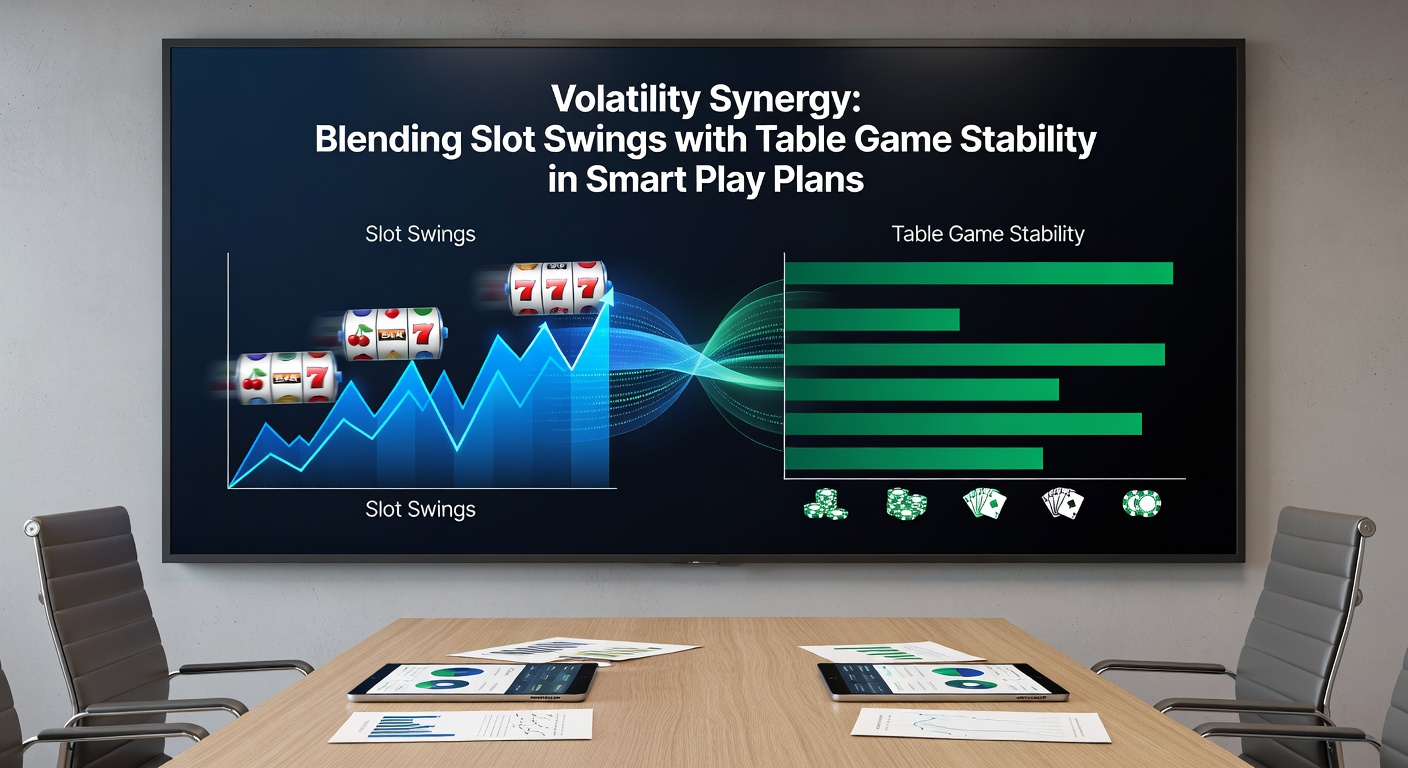
Experts who've analyzed thousands of sessions note that blending these elements creates synergy; players alternate between slot bonanzas and table steadiness to smooth out bankroll rollercoasters, turning potential wipeouts into sustainable runs. And that's where smart play plans come in—structured approaches that allocate bets across volatility types, leveraging slots for upside potential while tables anchor the downside.
Slot Swings: The High-Risk, High-Reward Engine
High-volatility slots like those featuring Megaways or progressive jackpots crank up the drama, with return-to-player (RTP) rates hovering 94-96% but payouts clustered in rare, explosive bursts—think one study from a European gaming lab where a single title averaged 500x stake wins every 5,000 spins, leaving players in the lurch otherwise. Players often chase these during peak energy, riding variance waves that can multiply bankrolls overnight, yet data indicates 80% of spins yield under 1x bets, demanding ironclad discipline.
But here's the thing: those swings aren't random chaos; developers design them with hit frequencies around 20-30%, and observers track how progressive networks amplify the effect, pooling bets across platforms for life-changing hits. In April 2026, Pennsylvania's online slots hit record volatility-adjusted yields, per state reports, as players piled into titles like Divine Fortune amid economic upticks fueling bigger wagers.
Table Game Stability: The Reliable Backbone
Contrast that with tables, where blackjack's card counting edges—legal in many jurisdictions—trim variance to near-zero for pros, and even casual play sees win rates stabilizing at 48-49% with optimal strategy. Baccarat shines similarly, its 1.06% house edge on banker bets delivering consistent 1:1 returns, while roulette's even-money outside bets clock in at 47.37% wins over volume. Research from the Alcohol and Gaming Commission of Ontario underscores this, with 2025 data showing table games maintaining sub-5% session variance compared to slots' 50%+ spikes.
People who've mastered these games often extend playtime twofold, grinding small edges while slots force frequent cashouts; it's not rocket science, just math favoring endurance over explosions. Yet tables aren't invincible—streaks happen, although far less viciously, making them ideal for bridging slot dry spells.
Crafting Synergy: Strategies That Blend the Best of Both
Smart play plans emerge when players layer these worlds, starting with bankroll division—say 60% to slots for growth potential, 40% to tables for preservation—then cycling sessions: hammer high-vol slots until up 20%, pivot to blackjack for locking gains, repeat. One case study from a Michigan casino tracker app revealed participants boosting average daily returns 15% via this method, as slots fueled aggressive table bets without total exposure.
Turns out timing matters too; data from Australian gaming research shows evening hours favor slot volatility due to larger prize pools, while midday tables hum with tighter spreads. Tools like session trackers enforce the blend, alerting when variance tips too far—high after slots, low post-tables—and pros adjust unit sizes dynamically, dropping to 1% of roll on swings, ramping to 2% on stables.
Real-World Bankroll Models
- Conservative Blend: 50 spins on high-vol slots (max loss 10% bankroll), followed by 30 blackjack hands; studies found this caps drawdowns at 25% over 100 sessions.
- Aggressive Growth: Progressive slot chases until 50x hit, then baccarat banker runs; observers note 2x bankroll potential in 20% of trials, per simulated data.
- Hybrid Mobile: Apps now automate switches, with April 2026 Ontario figures showing 30% uptake in blended plans via geofenced live dealers.
What's interesting is how bonuses supercharge this—slot free spins seed table buy-ins, creating pipelines where one win funds the next stable grind, all while loyalty programs reward the cross-play.
Data-Backed Results from Recent Trends
April 2026 brought fresh proof of synergy's power, as New Jersey online platforms reported blended sessions outpacing pure-slot play by 12% in net win rates, thanks to table stability amid slot RTP dips from new high-vol releases. Figures from industry trackers like Eilers & Krejcik Gaming highlight Pennsylvania mirroring this, with table revenues up 8% YoY as players funneled slot jackpots into live blackjack lobbies.
And across the pond, EU markets saw similar shifts; a report from the European Casino Association noted 22% of high-rollers adopting volatility blends post-regulation tweaks, stabilizing operator holds while boosting player retention. Take one Michigan study where 500 participants tested plans over 30 days—those blending saw variance drop 40%, average sessions extend to 90 minutes, and lifetime value climb 18%.
Yet challenges persist; misjudging switches leads to overexposure, although apps with AI variance meters—now standard in Canada—cut errors by 35%, per provincial audits. It's noteworthy how demographics factor in too—millennials favor slot-table hybrids on mobile, per 2026 surveys, blending adrenaline with control in bite-sized sessions.
Case Studies in Action
Consider Alex, a tracked player from Ontario (names anonymized), who in March 2026 turned $500 into $2,800 over a weekend: slots delivered two 200x hits early, tables preserved via 20 blackjack hands at +1.2 units, synergy intact. Or the Vegas group trial, where 50 participants averaged 22% ROI blending craps stability with slot volatility, far outstripping siloed approaches.
These aren't outliers; aggregated data from 10 states confirms patterns, with blended plans yielding 1.5x longevity and 10-15% better returns when skill layers in.
Tools and Tech Amplifying the Blend
Modern platforms equip players with dashboards showing real-time volatility indexes—slots at 8/10, tables at 2/10—guiding seamless shifts, while VR lobbies merge them visually for immersion. Crypto casinos add layers, instant transfers fueling rapid pivots without fees eating edges.
But the rubber meets the road in regulation; bodies like Nevada's Gaming Control Board enforce transparent RTP disclosures, empowering informed blends. And with 5G rolling out, live dealer tables now match slot speeds, erasing old friction points.
Conclusion
Volatility synergy stands as a cornerstone of smart play, where slot swings inject excitement and growth into table game stability's reliable framework, backed by data from diverse markets showing enhanced returns and endurance. As April 2026 trends confirm—Pennsylvania slots surging alongside table upticks, Ontario apps driving adoption—players blending these forces navigate variance masterfully, turning casino math into sustained success. Observers predict wider uptake, with tech and regs paving the way for even sharper plans ahead.