Sound Design Layers Shaping Immersion Cycles Across Multi-Provider Digital Gaming Suites
Quinn Werner · Jul 22, 2026
Sound Design Layers Shaping Immersion Cycles Across Multi-Provider Digital Gaming Suites
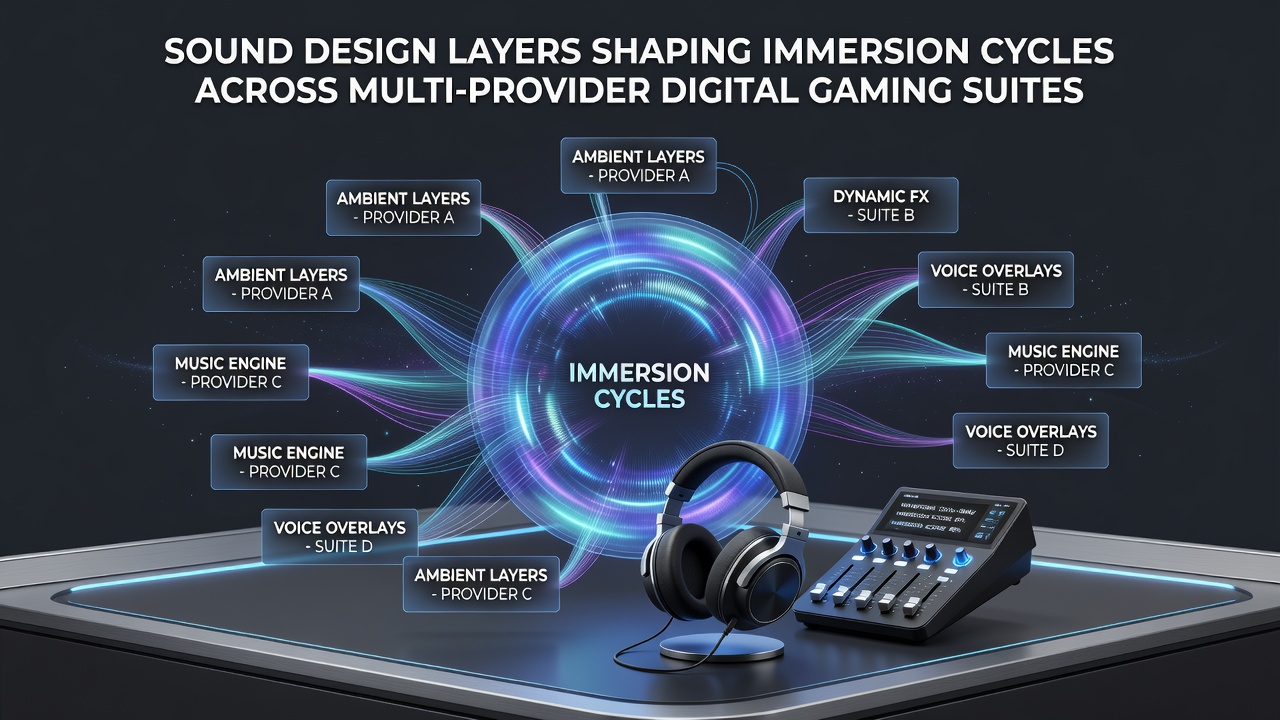
Sound design in digital gaming suites operates through distinct layers that include ambient backgrounds, foley effects, musical scores, and voice elements, and these components interact to form immersion cycles that maintain player engagement across platforms from multiple providers. Industry data from July 2026 shows continued expansion in cross-provider integration, where studios using engines such as Unreal and Unity coordinate audio assets to support seamless transitions between console, PC, and mobile environments.
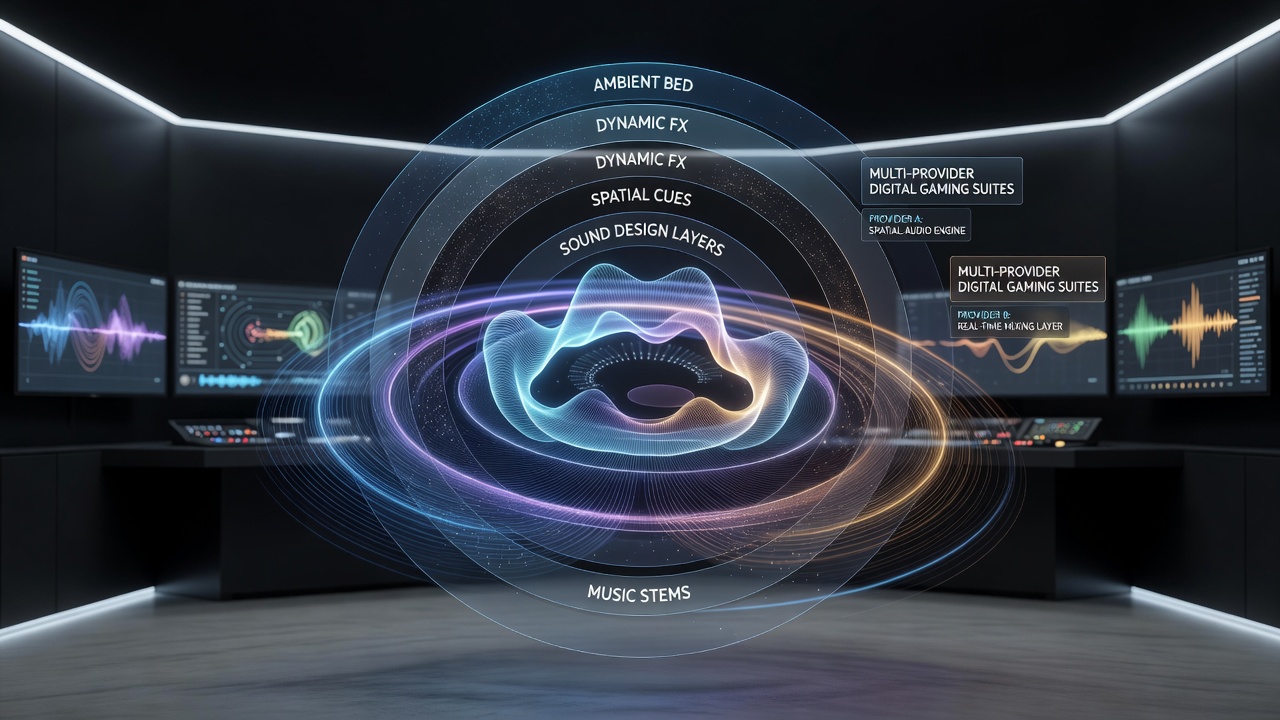
Each layer contributes specific functions within the overall audio architecture. Ambient layers establish environmental context through continuous or looped elements, while foley layers deliver precise interaction feedback that aligns with player actions. Musical layers adjust dynamically based on gameplay states, and voice layers supply narrative cues that reinforce story progression. According to reports from the Entertainment Software Association, audio processing advancements in 2026 have enabled more precise synchronization of these layers across different hardware configurations.
Core Components of Audio Layering in Multi-Provider Environments
Multi-provider digital gaming suites rely on standardized audio middleware that allows developers to stack and modulate layers without disrupting performance on varied systems. Providers such as Sony, Microsoft, and Nintendo each maintain distinct hardware constraints, yet common frameworks permit shared asset pipelines that preserve layer integrity during porting processes. Research from the Interactive Digital Media Institute indicates that successful layering reduces audio latency by coordinating sample rates and spatial positioning data in real time.
Immersion cycles emerge when these layers respond to player behavior patterns. A cycle typically begins with baseline ambient and musical elements that set the scene, then escalates through added foley and voice triggers during key interactions. Data from academic studies on game audio processing reveals that cycles lasting between four and seven minutes correlate with sustained attention metrics across tested platforms. Providers have adopted adaptive mixing algorithms that scale layer intensity according to session duration and input frequency.
Provider-Specific Implementations and Shared Standards
Developers working with Microsoft platforms often emphasize spatial audio layering that utilizes hardware-accelerated processing for positional accuracy, whereas Nintendo titles frequently prioritize compact layer sets optimized for portable hardware. PC-based providers allow greater customization of audio layers through user-configurable settings. Despite these differences, organizations such as the International Game Developers Association have documented increased adoption of unified audio protocols that facilitate consistent cycle structures when games move between ecosystems.
Figures released in mid-2026 from European game technology consortia highlight that collaborative projects involving three or more providers achieved higher layer compatibility scores after implementing shared metadata standards for audio triggers. These standards specify how each layer responds to game state variables, ensuring that immersion cycles maintain coherence even when rendered on dissimilar devices.
Technological Shifts Observed in July 2026
Updates to audio engines during July 2026 introduced enhanced procedural generation tools that automate layer blending based on environmental parameters. Providers integrated machine learning models trained on player telemetry to predict optimal cycle lengths and layer densities. A study conducted by researchers at a Canadian digital media laboratory found measurable improvements in cross-platform audio consistency following these updates, with synchronization errors dropping below previously recorded thresholds.
Voice layer processing benefited particularly from new text-to-speech systems that adapt intonation according to surrounding audio layers. This adaptation supports narrative immersion by preventing voice elements from clashing with dynamic music or ambient shifts. Providers distributing titles across mobile and console suites reported streamlined testing workflows after adopting these tools, according to industry tracking data.
Integration Challenges and Resolution Patterns
Layer conflicts arise when hardware differences alter playback characteristics, such as frequency response ranges or channel counts. Resolution typically involves priority hierarchies that designate which layers retain prominence during resource constraints. Observers note that providers addressing these challenges through iterative testing cycles have documented reduced player drop-off rates in multi-platform releases.
Shared testing environments established by industry groups allow developers to simulate immersion cycle behavior across provider hardware before final deployment. These environments track layer interactions under variable network conditions and input methods, producing datasets that inform subsequent refinements.
Conclusion
Sound design layers continue to define immersion cycles in multi-provider digital gaming suites through coordinated technical standards and adaptive processing methods. July 2026 developments in middleware and procedural tools have further aligned layer behavior across console, PC, and mobile platforms. Continued data collection from organizations tracking game technology adoption will clarify how these audio systems evolve alongside new hardware generations.