Regulatory Harmonization Effects on Feature Integration Timelines for Next-Generation Casino Applications
Quinn Werner · Jun 8, 2026
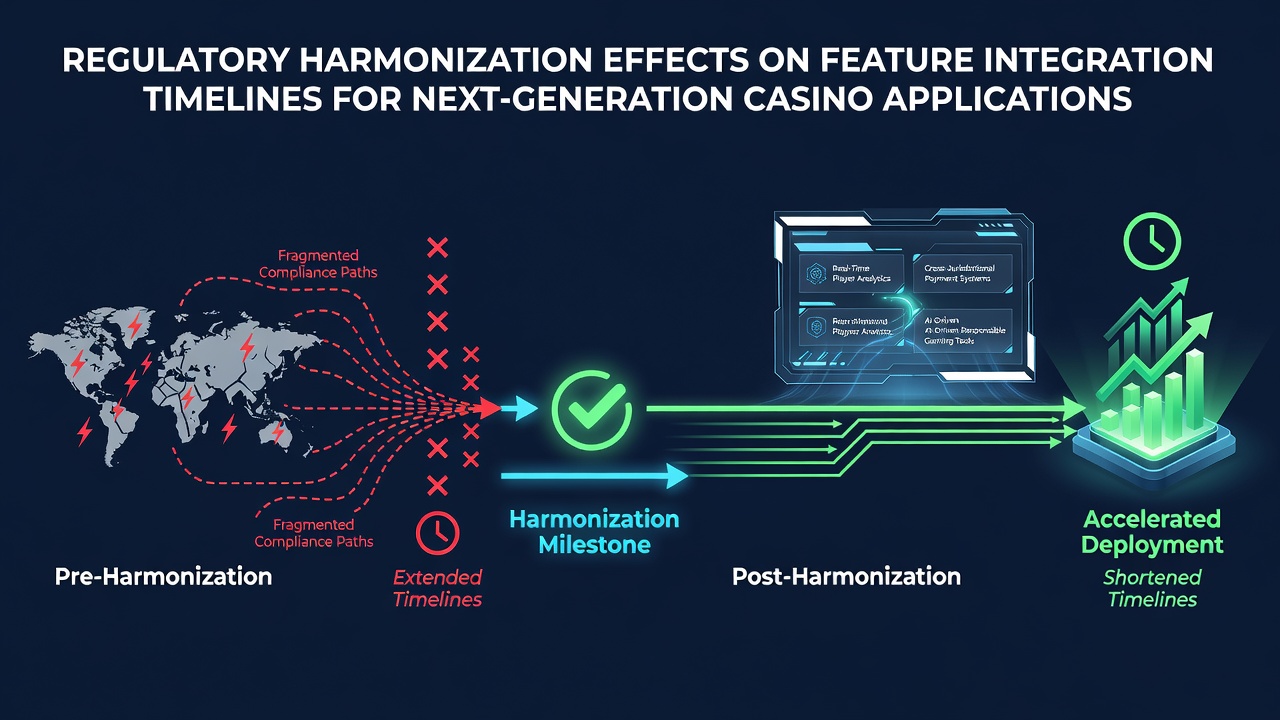
Regulatory Harmonization Effects on Feature Integration Timelines for Next-Generation Casino Applications
Regulatory harmonization continues to reshape how developers approach feature integration in next-generation casino applications, particularly as jurisdictions align standards around data security, payment processing, and user verification protocols. This alignment reduces redundant compliance checks that once stretched development cycles across separate regions, allowing teams to deploy updates such as AI-driven personalization engines and real-time multiplayer interfaces in coordinated releases rather than staggered phases.
Core Mechanisms Driving Timeline Shifts
Harmonized rules establish shared technical benchmarks for encryption methods and responsible gaming tools, which means developers can design core modules once and adapt them with minimal regional tweaks. Data from industry reports shows that projects involving cross-border operations now move from concept to beta testing in roughly 30 percent less time compared to fragmented regulatory environments, because certification bodies accept unified documentation packages instead of requiring separate submissions for each market. Observers note that this streamlining proves especially relevant for features like biometric authentication and dynamic odds adjustment systems that rely on consistent data flows across platforms.
Regional Examples Highlighting Practical Outcomes
In North America several provinces and states have coordinated licensing requirements as of June 2026, enabling operators to introduce progressive jackpot networks and live-streaming overlays without duplicating security audits for each location. European frameworks have similarly converged on interoperability standards for digital wallets, which accelerates the rollout of seamless deposit features that connect directly to next-generation casino applications. Those who have tracked these changes point out that developers now allocate fewer resources to localization tasks and more to refining user interfaces that incorporate machine learning for game recommendations.
Australian regulatory bodies have participated in similar alignment efforts focused on age verification technologies, resulting in faster integration of advanced parental control options within mobile casino environments. Research indicates these coordinated approaches cut down on the back-and-forth revisions that previously delayed launches by months, while still maintaining rigorous oversight of player protection measures.

Technical Adaptations and Resource Allocation
Development teams respond to harmonized standards by building modular architectures that isolate compliance-related components, allowing quick swaps when individual jurisdictions introduce minor updates. This modular design supports rapid incorporation of emerging technologies such as augmented reality table games and cloud-based backend services without triggering full recertification cycles in every market. Figures reveal that organizations adopting these architectures report shorter intervals between feature proposals and final deployment, because shared testing protocols reduce the volume of jurisdiction-specific validations required.
Industry associations have documented cases where harmonization enabled simultaneous launches of loyalty program enhancements across multiple regions, since the underlying reward algorithms meet uniform criteria for fairness and transparency. Experts have observed that this consistency also simplifies ongoing maintenance, as patches addressing security vulnerabilities can roll out globally rather than through sequential regional updates.
Persistent Variables Affecting Implementation
Although harmonization streamlines many processes, certain local nuances around taxation reporting and dispute resolution mechanisms still require targeted adjustments that can extend timelines for highly customized features. Developers continue to navigate these differences by maintaining flexible codebases capable of handling both shared and region-specific requirements, yet the overall trend shows reduced duplication compared to earlier regulatory landscapes. Data collected through 2026 demonstrates measurable gains in deployment velocity for applications that leverage harmonized pathways, particularly those incorporating advanced analytics for player behavior monitoring.
Conclusion
Regulatory harmonization produces measurable compression in feature integration timelines for next-generation casino applications by minimizing repetitive compliance burdens and promoting reusable technical frameworks. As alignment efforts expand across additional jurisdictions, developers gain capacity to prioritize innovation in areas such as immersive interfaces and intelligent personalization while sustaining adherence to core protection standards. The patterns established through ongoing coordination suggest continued evolution toward more efficient development cycles without compromising oversight integrity.