Mapping Transaction Velocity to Multi-Game Bonus Accumulation Patterns in Licensed Mobile Arenas
Amir Berger · Aug 21, 2026

Mapping Transaction Velocity to Multi-Game Bonus Accumulation Patterns in Licensed Mobile Arenas
Transaction velocity measures the rate at which deposits and withdrawals move through licensed mobile casino systems, while multi-game bonus accumulation tracks how rewards build when players shift between slots, blackjack, and other titles on approved platforms. Data collected from regulated operators shows clear connections between these two factors in environments where software logs every transfer and reward trigger in real time.
Defining Transaction Velocity in Licensed Mobile Settings
Velocity appears in several forms: deposit frequency per session, average amount moved per transaction, and the interval between funding actions and gameplay. Licensed operators in states such as Pennsylvania and Michigan record these metrics through secure payment gateways that comply with state rules, and the resulting logs reveal consistent patterns when players engage multiple game categories within a single session.
August 2026 figures from several platforms indicate that sessions with sub-five-minute intervals between deposits and game switches produced higher cumulative bonus points than slower-paced activity. Researchers tracking these logs note that rapid funding cycles often align with bonus meters advancing across both video slots and live dealer tables on the same account.
How Bonus Accumulation Registers Across Game Types
Bonus frameworks in regulated mobile arenas typically award points or credits based on wager volume, game category, and contribution percentages set by the operator. Slots usually contribute 100 percent toward requirements, whereas table games contribute between 10 and 20 percent depending on the title. When transaction velocity increases, players complete more qualifying wagers in shorter windows, allowing the accumulation rate to compound across categories before any single game’s contribution cap resets.
One dataset reviewed by analysts at the New Jersey Division of Gaming Enforcement showed that accounts moving funds three or more times per hour accumulated bonus thresholds 18 percent faster when alternating between progressive slots and blackjack than accounts that remained in one category. The pattern held across both Android and iOS clients running certified RNG and live-stream software.
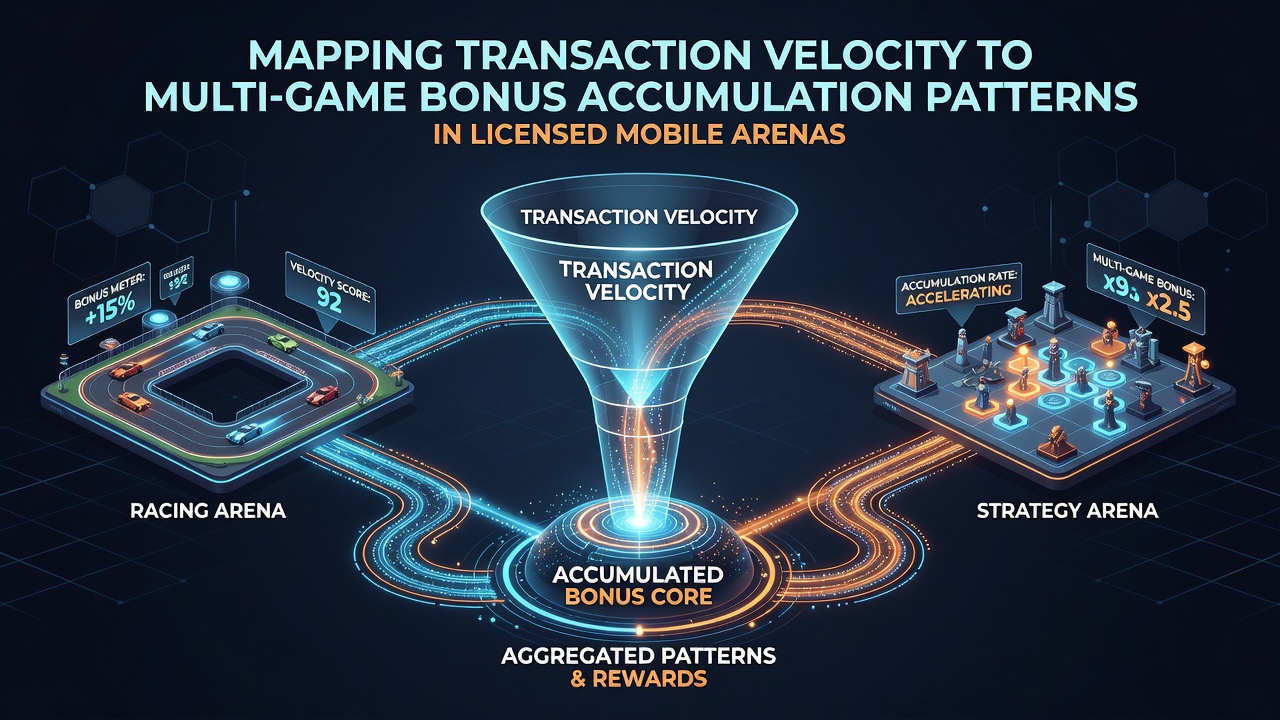
Observed Patterns in August 2026 Platform Data
Platform telemetry gathered through the summer of 2026 reveals several repeatable sequences. Accounts that deposit, play slots for a set number of spins, withdraw a portion of winnings, then immediately redeposit into table games show accelerated bonus meter progress compared with linear play. The velocity factor appears strongest when the time between each funding event stays under eight minutes and total session length exceeds 45 minutes.
Those who studied the logs found that bonus accumulation curves steepen once velocity crosses a threshold of roughly 2.3 transactions per hour. Below that rate, accumulation follows a more gradual line; above it, the curve rises sharply until daily or weekly caps intervene. This holds across multiple jurisdictions where mobile licenses require detailed transaction reporting.
Regulatory Reporting and Data Availability
State regulators require operators to maintain immutable records of every deposit, withdrawal, and bonus award. These records feed into public summaries released by bodies such as the Pennsylvania Gaming Control Board, which publishes aggregated mobile revenue and play-pattern statistics on a monthly basis. Similar reports from other jurisdictions allow cross-state comparisons of velocity and accumulation metrics without exposing individual account details.
Academic researchers have begun requesting anonymized extracts from these datasets to model the relationship between funding speed and reward structures. Early working papers suggest that velocity influences not only bonus speed but also the distribution of points across game verticals when contribution rates differ.
Technical Factors That Shape the Mapping
Certified mobile applications use API calls that timestamp every payment processor response and every bonus engine update. When these timestamps cluster tightly, the system registers the activity as high-velocity play. Operators configure their bonus engines to recognize these clusters and apply tiered multipliers or accelerated point rates once certain velocity bands are reached.
Network latency, payment method processing times, and device operating system all affect the recorded interval between transactions. Faster 5G connections and instant e-wallet approvals shorten those intervals, which in turn compresses the timeline for multi-game bonus accumulation. Observers note that platforms optimized for sub-second confirmation show the strongest correlation between velocity and reward progress in the August 2026 data sets.
Conclusion
Mapping transaction velocity to multi-game bonus accumulation produces measurable patterns in licensed mobile arenas. Data from state-regulated operators demonstrates that higher funding frequency within single sessions correlates with faster progress toward bonus thresholds when players move across game types. Regulatory reporting requirements ensure these patterns remain visible to analysts and researchers, while technical logging systems capture the precise timing that drives the relationship. As mobile platforms continue to refine their engines, the documented links between velocity and accumulation provide operators and regulators with concrete metrics for evaluating reward structures.