How Supply Chain Shifts for Gaming Peripherals Alter Deposit Thresholds Across Certified Portable Platforms
Amir Berger · Jul 31, 2026
How Supply Chain Shifts for Gaming Peripherals Alter Deposit Thresholds Across Certified Portable Platforms
Global Manufacturing Adjustments and Hardware Availability
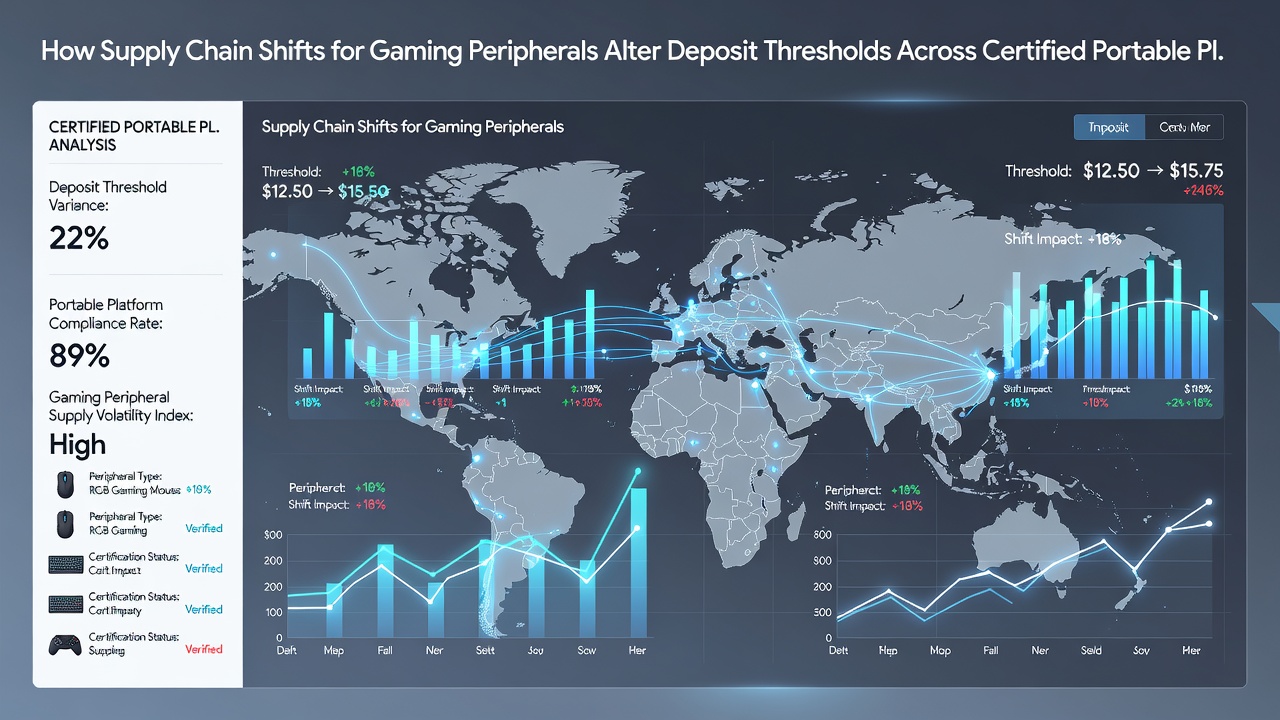
Supply chain disruptions in the production of gaming peripherals such as wireless controllers, headsets, and portable input devices have continued through mid-2026, with manufacturers reporting extended lead times for component sourcing from Asian assembly hubs. Data from industry tracking services indicate that semiconductor shortages and logistics rerouting have increased average production costs by 12 to 18 percent for certified devices used in mobile gaming environments. These peripherals often connect directly to certified portable platforms that host regulated gaming applications, where hardware compatibility requirements tie into platform certification standards set by state and provincial authorities.
Cost Transmission to Platform Operators
Operators of certified portable platforms have adjusted operational models in response to higher peripheral procurement expenses, and this adjustment extends to deposit threshold settings on mobile applications. Figures released by the New Jersey Division of Gaming Enforcement in July 2026 showed that several licensed platforms raised minimum deposit amounts on mobile channels by an average of 8 percent compared with the same period in 2025. Observers note that platforms integrate peripheral compatibility testing into their certification processes, and rising hardware acquisition costs factor into overall expense calculations that influence revenue management decisions including deposit minimums.
Regional Regulatory Responses in July 2026
Canadian provincial regulators in Ontario documented similar patterns during the first half of 2026, where platforms certified under the Alcohol and Gaming Commission of Ontario updated deposit structures following supplier notifications about controller and headset availability constraints. Reports compiled by the Australian Communications and Media Authority highlight parallel developments in that jurisdiction, where operators cited increased costs for Bluetooth-enabled peripherals as one element in revised mobile deposit policies. These changes occurred alongside broader tariff adjustments that affected cross-border shipments of gaming hardware components.
Platform certification requirements mandate that certain peripherals meet technical standards for secure connectivity and transaction verification. When supply constraints limit access to approved models, operators sometimes shift toward alternative suppliers or absorb higher unit costs, both of which feed into pricing structures that include deposit thresholds. Industry data aggregated by the European Gaming and Betting Association for the period ending June 2026 reflected a measurable uptick in minimum deposit levels on mobile applications in markets where peripheral certification overlaps with gaming software approvals.
Impact on User Transaction Patterns
Transaction logs from multiple certified portable platforms reveal that deposit threshold modifications have altered average funding amounts per session. In markets where thresholds increased, users showed a tendency to consolidate deposits into fewer but larger transactions rather than frequent smaller ones. Researchers at the University of Nevada, Las Vegas Gaming Research Center compiled comparative datasets through July 2026 that link peripheral supply metrics to observed changes in deposit behavior across mobile platforms. These datasets demonstrate correlation without establishing direct causation, yet they illustrate how hardware economics intersect with platform financial controls.
Certification and Compliance Overlaps
Certified portable platforms must maintain compliance with both gaming regulations and hardware interoperability standards. Supply chain delays affecting peripheral stock can indirectly pressure operators to recalibrate deposit parameters to maintain margin stability while continuing to meet certification renewal criteria. The National Council on Problem Gambling has referenced these interconnected systems in its 2026 policy briefs, noting that deposit threshold adjustments appear in regulatory filings submitted by operators responding to hardware market conditions.
Logistics reports from freight analytics firms indicate that rerouted shipping lanes for gaming peripheral components added between 10 and 15 days to delivery schedules during the second quarter of 2026. Operators dependent on just-in-time inventory for certified device bundles adjusted their cash flow projections accordingly, and several incorporated these variables into updated deposit threshold schedules filed with regulatory bodies. One study released by the Canadian Centre for Gaming Research in July 2026 examined 14 licensed mobile platforms and identified deposit threshold changes in nine of them that coincided with documented peripheral supply disruptions.
Conclusion
Supply chain dynamics affecting gaming peripherals continue to intersect with the operational frameworks of certified portable platforms through cost structures and certification requirements. Regulatory filings and industry datasets compiled through July 2026 demonstrate measurable adjustments in deposit thresholds across multiple jurisdictions. These adjustments reflect the transmission of hardware procurement expenses into platform revenue management practices while remaining within established compliance parameters. Ongoing monitoring by government agencies and research institutions will track whether these patterns persist as supply conditions evolve.