Decoding how software certification timelines influence cross-format bonus stacking in emerging portable betting ecosystems
Cameron Berger · Jul 1, 2026
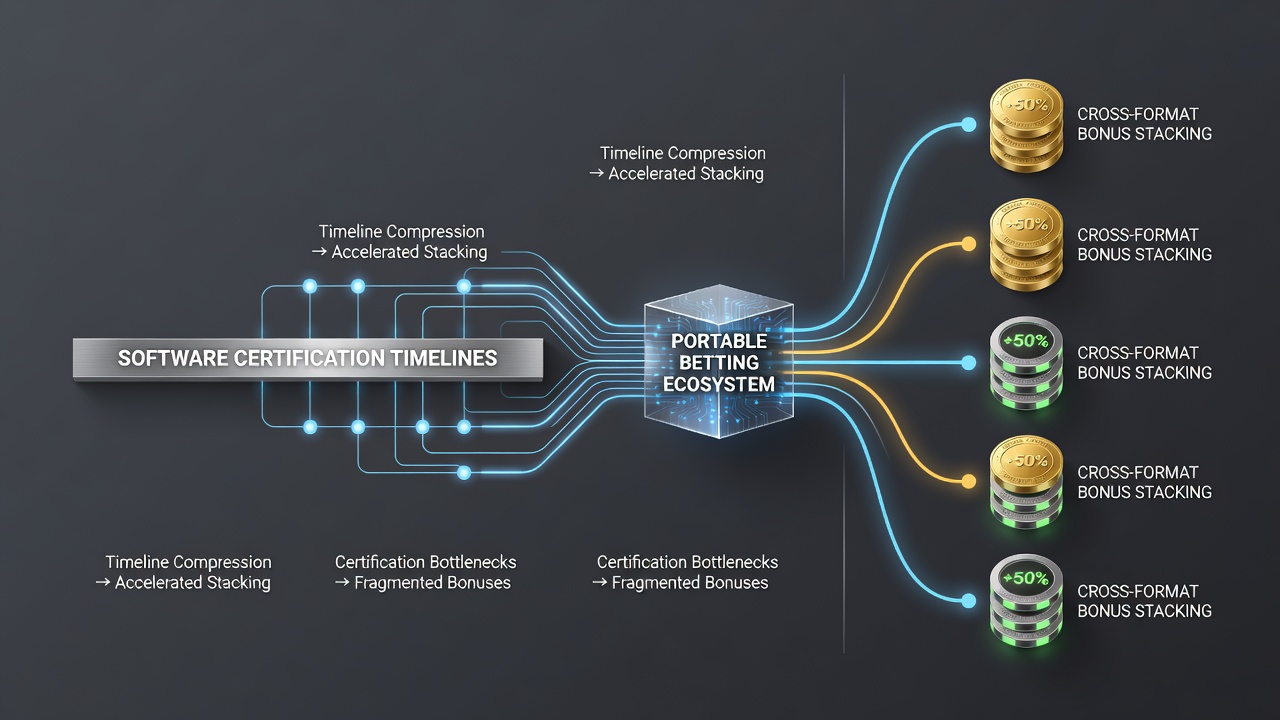
Decoding how software certification timelines influence cross-format bonus stacking in emerging portable betting ecosystems
Software certification timelines play a central role in shaping how operators manage cross-format bonus stacking across portable betting platforms, where players combine rewards from slots, table games, and live dealer formats within single mobile sessions. Regulatory bodies require independent testing labs to verify game integrity, random number generators, and bonus mechanics before any new feature reaches users, which creates measurable delays between development and deployment. These delays directly affect the speed at which platforms can introduce layered bonus systems that track activity across multiple game categories in emerging mobile ecosystems.
Certification processes across regions
Testing laboratories evaluate software against jurisdiction-specific standards that cover security protocols, payout accuracy, and integration of promotional mechanics, while emerging markets in North America and parts of Asia Pacific continue to refine their approval frameworks as of July 2026. The New Jersey Division of Gaming Enforcement maintains detailed technical standards that mandate sequential review stages for any update involving bonus calculations, and similar processes operate through bodies such as the Alcohol and Gaming Commission of Ontario. Observers note that average certification periods range from four to twelve weeks depending on the complexity of the bonus stacking logic and the number of game formats involved, with longer timelines appearing when cross-format tracking requires new data synchronization modules.
Impact on bonus stacking mechanics
Cross-format bonus stacking relies on real-time data exchange between different game engines so that wagering on slots can contribute toward live dealer rewards and vice versa. When certification timelines extend, operators face restrictions on rolling out unified loyalty engines that aggregate player activity across portable applications. Data from industry reports shows that platforms in regulated environments often stagger feature releases, first obtaining approval for single-format bonuses before expanding to multi-format systems. This sequential approach stems directly from the requirement that each new integration undergo separate validation to confirm it meets fairness criteria across all participating game types.
Regional variations and market effects
European regulatory environments apply harmonized testing requirements through recognized labs that assess both game software and associated promotional systems, whereas Australian state authorities focus on responsible gambling controls embedded within bonus tracking software. Research indicates that shorter certification windows in certain Canadian provinces have allowed faster iteration of portable bonus features compared with markets where multi-stage reviews remain mandatory. Operators in these faster-track regions demonstrate higher rates of cross-format stacking implementation, as measured by the number of approved mobile applications that combine slot progressives with table game multipliers within the same user account.

Technical challenges in portable ecosystems
Portable betting applications must handle variable network conditions while maintaining accurate bonus accumulation across game formats, which adds layers of scrutiny during certification. Testing labs examine how bonus meters respond to interrupted sessions, device switches, and concurrent play across slots and live dealer tables. Figures reveal that certification bodies increasingly require documentation of cloud-based synchronization methods because many emerging ecosystems rely on server-side tracking rather than device-resident storage. These additional verification steps extend timelines but reduce post-launch issues related to mismatched bonus balances when players move between game types on smartphones and tablets.
Data patterns in approval timelines
Analysis of approval records from multiple jurisdictions shows that bonus stacking features involving three or more game formats require 30 to 50 percent more review time than single-format promotions. The extra duration arises because evaluators must confirm that contribution rates, expiry rules, and maximum caps function consistently whether a player engages with video slots, blackjack, or roulette streams. Industry associations have documented cases where platforms delayed full cross-format rollouts until all components cleared simultaneous certification batches, thereby avoiding partial launches that could confuse reward calculations.
Future developments in certification
Regulatory bodies continue to explore streamlined pathways for incremental updates that do not alter core bonus mathematics, which could shorten timelines for minor stacking adjustments in portable environments. University-affiliated gaming research centers have examined how modular certification frameworks might allow operators to update individual game integrations without retesting entire loyalty systems. As portable betting ecosystems expand into additional markets through 2026, the relationship between certification duration and bonus feature availability remains a key determinant of how quickly new stacking options reach users across different device types.
Conclusion
Software certification timelines establish the pace at which cross-format bonus stacking becomes available in emerging portable betting ecosystems by dictating when integrated reward systems can legally operate across slots, table games, and live dealer formats. Jurisdictional differences in review procedures create varied deployment speeds, while technical validation requirements ensure that synchronization and fairness standards hold under real-world mobile conditions. Continued refinement of these processes will determine the extent to which operators can deliver unified bonus experiences on portable platforms in the coming years.