Analyzing the Effects of Multi-Jurisdictional Licensing on Software Update Cycles for Interactive Gaming Platforms
Yves Friedrich · Jun 29, 2026
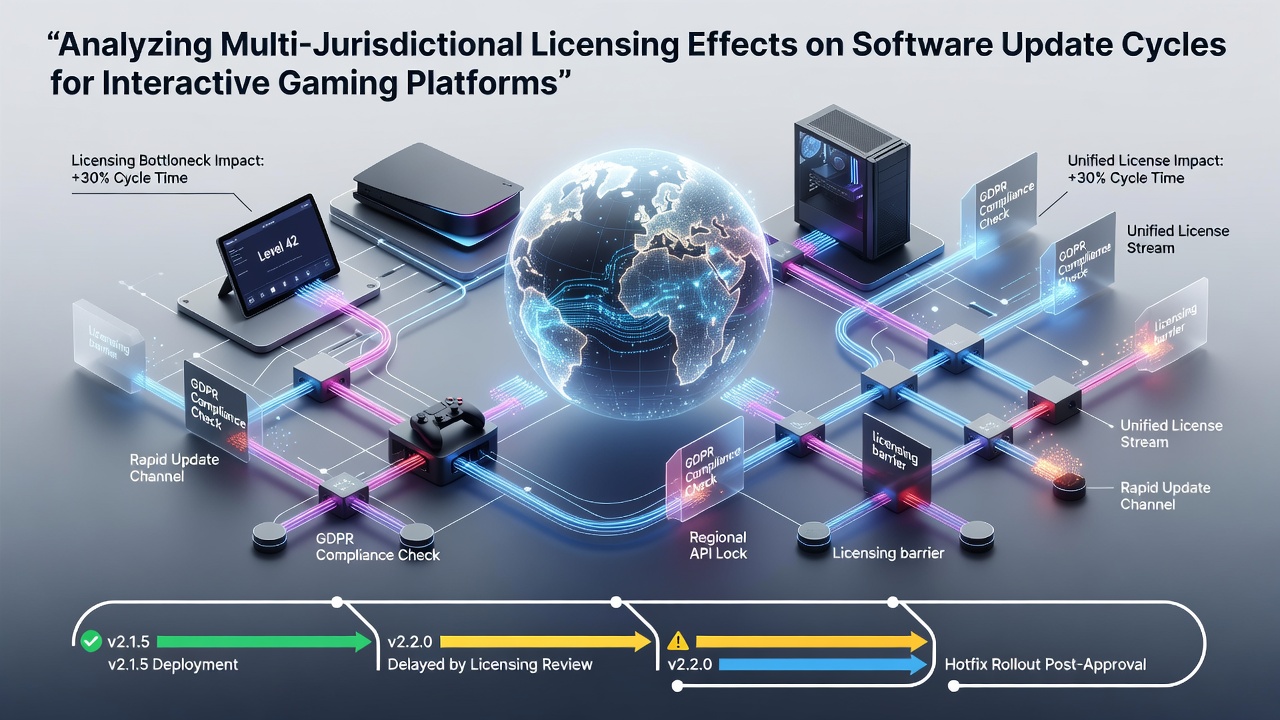
Analyzing the Effects of Multi-Jurisdictional Licensing on Software Update Cycles for Interactive Gaming Platforms
Multi-jurisdictional licensing requires interactive gaming platforms to secure approvals from regulatory bodies in each territory where they distribute software, and this process directly shapes how frequently developers can push updates to users. Platforms operating across borders encounter layered requirements involving content classification, data privacy standards, and technical compliance checks that vary by country or region, which in turn extends the time between initial release and subsequent patches or feature additions.
Regulatory Frameworks and Their Reach
Developers working with platforms such as digital storefronts and console networks must navigate distinct licensing regimes that govern everything from age ratings to payment processing protocols. The European Commission's digital services regulations, for instance, impose obligations on intermediary services that affect how quickly game updates receive clearance for distribution across member states. Meanwhile, authorities in Australia and Canada apply their own classification systems and consumer protection rules, creating parallel review streams that companies coordinate before rolling out changes.
These overlapping mandates mean that a single software revision often undergoes multiple evaluations rather than a unified global review. Data from industry reports indicate that platforms handling cross-border releases experience review timelines ranging from several weeks to multiple months depending on the number of jurisdictions involved and the nature of the changes proposed.
Impact on Update Frequency and Deployment
Software update cycles shorten or lengthen based on the depth of re-licensing required for each modification. Minor bug fixes sometimes bypass full re-examination in certain markets, whereas content expansions or new monetization features trigger fresh assessments that reset approval clocks. Observers note that teams managing titles with global audiences often stage releases regionally, releasing updates first in jurisdictions with streamlined processes before expanding to stricter territories.
One study of mobile and PC gaming ecosystems revealed that platforms maintaining simultaneous compliance across five or more regulatory zones posted updates 30 to 45 percent less often than those focused on single-market distribution. The added coordination overhead includes translating legal documentation, adjusting code for local data-handling rules, and scheduling staggered deployments to satisfy each authority's timeline.
Technical and Operational Adjustments
Engineering teams adapt their workflows to accommodate licensing checkpoints by building modular code structures that allow isolated updates without triggering wholesale reviews. Version control systems now incorporate metadata tags that flag which components require regulatory scrutiny in specific regions, enabling selective pushes that reduce overall cycle times. Platforms have also invested in automated compliance tools that scan proposed changes against known requirement sets from multiple jurisdictions before submission.

Yet the human element remains central, since regulatory bodies frequently request clarifications or modifications that cannot be fully automated. Companies therefore maintain dedicated legal and compliance staff who track evolving standards, such as those updated in June 2026 across several Asia-Pacific markets regarding in-game transaction disclosures. These specialists coordinate with development squads to align release schedules with anticipated approval windows rather than attempting post-submission acceleration.
Case Examples from Major Platforms
Take one major console network that expanded its European footprint in recent years. Its update cadence for certain live-service titles slowed after the introduction of additional content-moderation requirements, prompting the operator to implement quarterly rather than monthly feature drops in affected regions. Another example involves a PC distribution service that adjusted its patch strategy after Canadian provincial reviews began examining loot-box mechanics separately from federal guidelines, resulting in bifurcated update paths for North American users.
Research indicates that these adjustments have prompted many platforms to adopt unified development pipelines with built-in compliance gates, allowing teams to forecast delays more accurately and communicate expected timelines to players through in-app notices or patch notes.
Emerging Patterns and Industry Responses
Industry associations have begun publishing comparative analyses of licensing timelines across jurisdictions to help developers plan more effectively. These resources highlight jurisdictions where pre-certification programs or mutual recognition agreements reduce duplication, while also identifying markets where parallel submissions remain mandatory. Platforms that participate in such harmonization efforts report measurable improvements in their ability to maintain consistent update rhythms despite multi-jurisdictional obligations.
What's significant is how these licensing structures interact with rapid iteration models common in interactive entertainment. Live games relying on frequent balance changes or seasonal events face particular pressure, leading some operators to maintain separate code branches optimized for faster-approval regions while slower markets receive consolidated updates less frequently.
Conclusion
Multi-jurisdictional licensing continues to exert measurable influence over software update cycles for interactive gaming platforms by introducing sequential review processes and region-specific compliance layers. Companies respond through architectural changes, process automation, and strategic staging of releases, yet the fundamental requirement to satisfy divergent regulatory expectations remains a core determinant of deployment speed. As additional territories refine their digital content rules, platforms will likely further refine coordination mechanisms to balance compliance demands against user expectations for timely improvements and new features.